 Amelia Raby
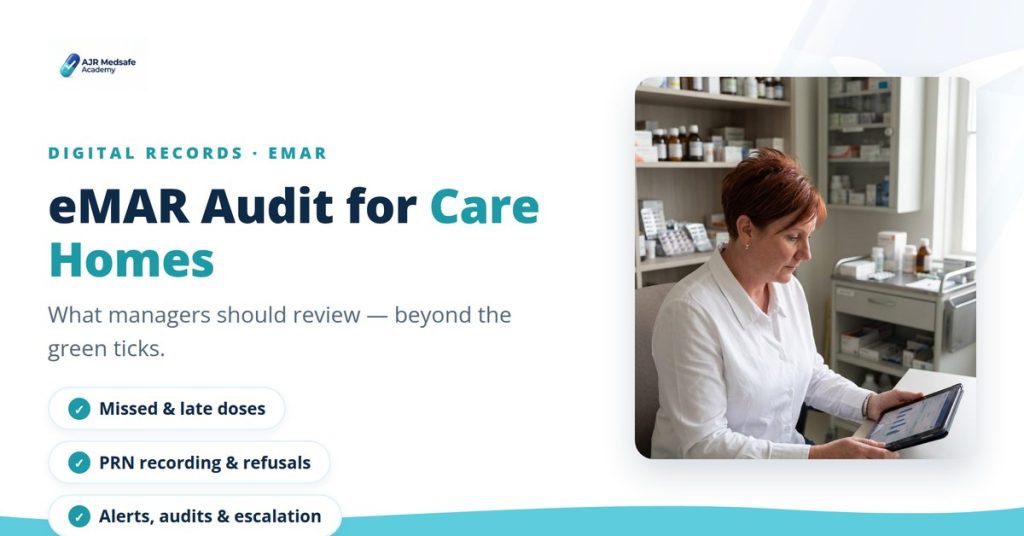
An eMAR audit for a care home reviews electronic medicines administration records, system reports and manager follow-up to check whether medicines are being recorded, escalated and governed safely. Digital systems can support safer practice, but they still need trained staff and active oversight.
An eMAR audit for a care home helps managers check whether electronic medicines records are accurate, complete and being used safely. eMAR systems can make medicines recording easier to monitor, but they do not remove the need for manager oversight. If staff do not understand what to record, how to respond to alerts, or when to escalate concerns, electronic records can still contain gaps.
For care homes, eMAR audit evidence can be especially useful before CQC inspection, after a medication error, when a new system has been introduced, or when managers notice repeated recording issues.
AJR MedSafe Academy provides Pre-CQC medicines compliance audits for care homes that can include eMAR records, medicines governance, staff training evidence and practical action planning.
Why eMAR audits matter in care homes
Electronic medicines administration records can help with prompts, alerts, stock visibility, reporting and oversight. However, the system is only as strong as the processes around it.
An eMAR audit can help managers check:
- whether medicines are recorded at the correct time
- whether non-administration is explained clearly
- whether PRN outcomes are recorded
- whether refusals are escalated appropriately
- whether staff are using notes correctly
- whether recurring alerts are being followed up
- whether records match care plans and medicines instructions
- whether manager reports are reviewed and acted on
The aim is not just to find errors. It is to understand whether the eMAR system is supporting safer practice or whether staff need clearer guidance, training or competency review.
What should an eMAR audit include?
A useful eMAR audit for a care home should review both individual records and wider governance. Managers should consider:
- person details and medicines support needs
- medicine names, strengths, doses and directions
- allergies and sensitivities
- administration records
- late, missed or refused medicines
- PRN protocols and outcome notes
- time-critical medicines
- variable-dose medicines
- topical medicines and patches
- controlled drugs where relevant
- stock discrepancies
- discontinued medicines
- handwritten or manually added entries
- audit logs and management reports
- action taken after alerts or exceptions
If your care home is unsure where to start, AJR MedSafe also has guidance on how to audit MAR and eMAR records.
Common eMAR audit findings in care homes
Common findings include:
- medicines marked as not given without a clear note
- PRN medicines given without recording the reason or outcome
- refusals recorded but not escalated
- staff relying on prompts without checking instructions carefully
- topical medicines not recorded consistently
- patch sites not documented clearly
- recurring stock issues
- late administration patterns
- alerts closed without evidence of follow-up
- manager reports available but not reviewed regularly
These issues can appear even when the eMAR software itself is working correctly. The question is whether staff understand the medicines process and whether managers have a clear system for review.
eMAR audit checklist for care homes
| Area to review | What to check |
|—|—|
| Person profile | Medicines support needs, allergies and care plan details are current |
| Administration entries | Records show what was given, when and by whom |
| Exceptions | Missed, late, refused or unavailable medicines have notes and follow-up |
| PRN medicines | Reason, dose, time, outcome and escalation are recorded |
| Topical medicines and patches | Application, removal and site rotation are clear |
| Stock and ordering | Stock discrepancies and ordering issues are reviewed |
| Manager reports | Exception reports are checked and actioned regularly |
| Staff access | Staff using the system are trained and competent |
Expert insight from Amelia Raby
Amelia often reminds providers that eMAR is a tool, not a replacement for medicines governance. The strongest care homes use eMAR reports to spot patterns, follow up exceptions and support staff learning, rather than only checking records after something has gone wrong.
eMAR audits and staff competency
An eMAR audit often identifies learning needs. For example, staff may need more confidence with PRN records, refusals, time-critical medicines, or what to write in notes.
This is where an individual knowledge and understanding assessment can help. It gives managers evidence that staff have understood safe medicines practice, alongside the provider’s own workplace competency checks.
Training and competency can also support new staff, annual refresher cycles, staff returning to medicines duties, or teams that have recently moved from paper MAR to eMAR.
Preparing for CQC with eMAR evidence
CQC can look at medicines records, governance and whether managers have oversight of safe medicines practice. For eMAR systems, managers should be able to show:
- how records are reviewed
- how exceptions are identified
- how staff are trained to use the system
- how medication errors or near misses are escalated
- how PRN, refusals and non-administration are managed
- how audit findings lead to action
- how learning is shared with staff
A care home eMAR audit can help gather that evidence into a clearer picture.
How AJR MedSafe Academy can help
AJR MedSafe Academy is led by Amelia Raby, a GPhC-registered Pharmacy Technician with extensive medicines management experience. Amelia supports care homes with practical review of medicines records and governance, not generic tick-box checks.
Support can include:
- eMAR audit for care homes
- MAR chart review
- Pre-CQC medicines compliance audits
- staff medicines training
- Knowledge & Understanding Assessments
- medication error review
- action planning and follow-up recommendations
If your care home needs support reviewing eMAR records, you can request a Pre-CQC medicines compliance audit or book a discovery call.
Frequently asked questions
Can eMAR records still contain medicines risks?
Yes. eMAR systems can support safer recording, but risks can still occur if staff do not understand instructions, close alerts without action, miss PRN outcome notes, or fail to escalate concerns.
How often should a care home audit eMAR records?
Frequency should reflect the service’s medicines risk, previous findings and internal policy. Many services review exception reports regularly and complete deeper audits at set intervals.
What should managers look for in eMAR reports?
Managers should review missed, late, refused and unavailable medicines, PRN use, stock issues, repeated alerts, staff recording patterns and whether actions have been followed up.
Can eMAR audit findings identify training needs?
Yes. Repeated recording issues, poor PRN notes or missed escalation can indicate that staff need refresher training, supervision or competency assessment.
Useful guidance for care providers
- CQC eMAR guidance: https://www.cqc.org.uk/guidance-regulation/adult-social-care/medicines-information-adult-social-care-services/electronic-medicines-administration-records
- CQC medicines administration records: https://www.cqc.org.uk/guidance-regulation/adult-social-care/medicines-information-adult-social-care-services/medicines-administration-records-adult-social-care
- CQC good governance of medicines: https://www.cqc.org.uk/guidance-regulation/adult-social-care/good-governance-medicines
- NICE NG67: https://www.nice.org.uk/guidance/ng67
This article is for general information only. An eMAR audit can help identify gaps and support improvement, but it cannot guarantee CQC compliance, a rating or an inspection outcome.